




「早い・旨い・安い」
──大量生産・大量消費の時代を象徴するこの価値観は、長らく私たちの食卓を支えてきました。
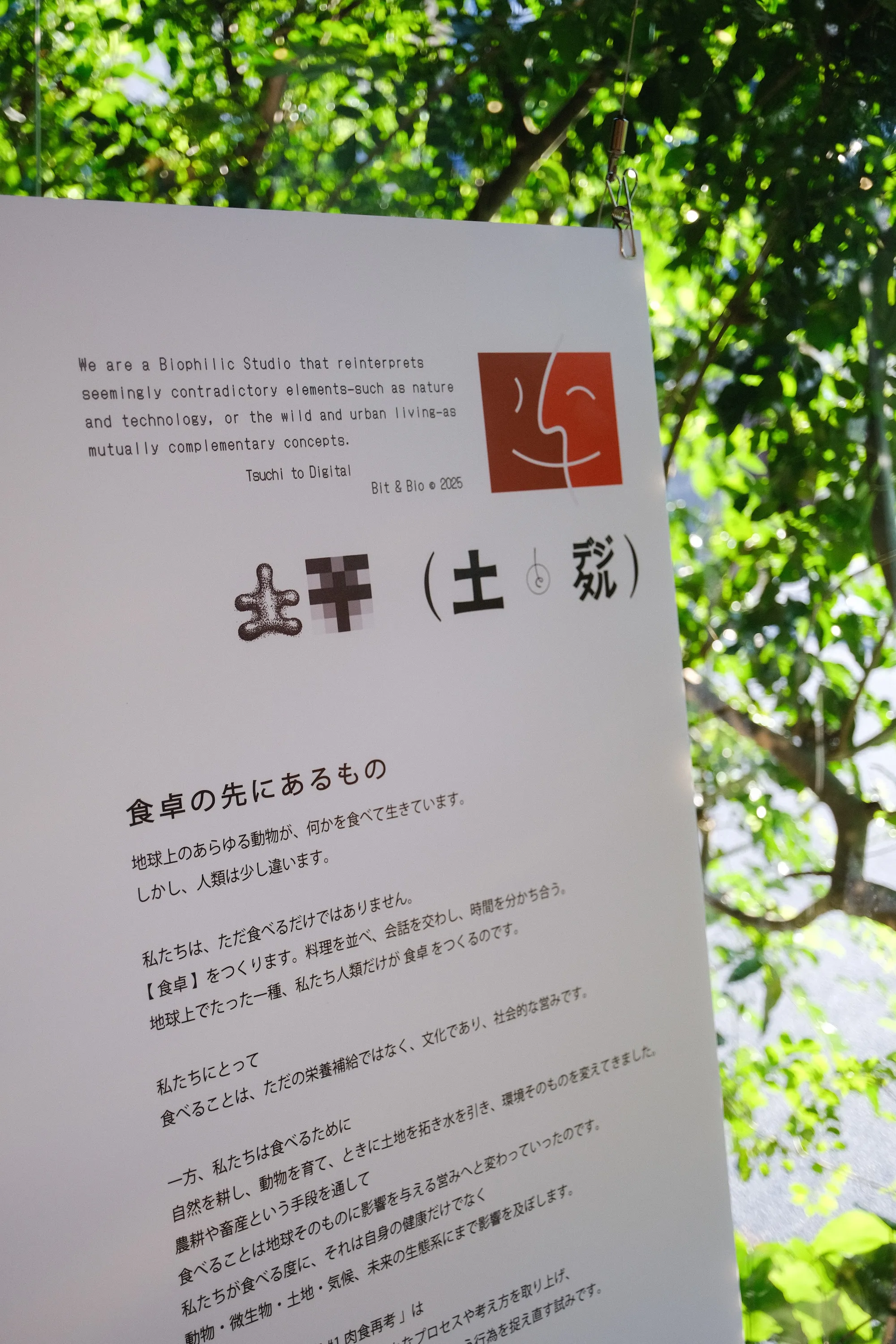
けれど今、過剰な生産と消費がもたらす環境負荷や気候変動など、見過ごせない課題が浮かび上がっています。食べることは、実は個人の嗜好にとどまらず、人間社会・自然・そして未来の生態系にまで影響を及ぼす行為です。私たちが「食べる」たびに、人間以外の存在とどのように関わり、影響し合っているのか。そのつながりを今、見直す必要があります。
スローフード運動の再興、ヴィーガニズムの広がり、ミシュラングリーンスターの登場。近年、食における価値観にも変化の兆しが見え始めました。「早い・旨い・安い」といった、食卓の上だけで完結していた評価軸から、食材がどこから来て、どんなプロセスを経て届いたのかという、“食卓の外”にまで目を向ける動きが広がってきているのです。
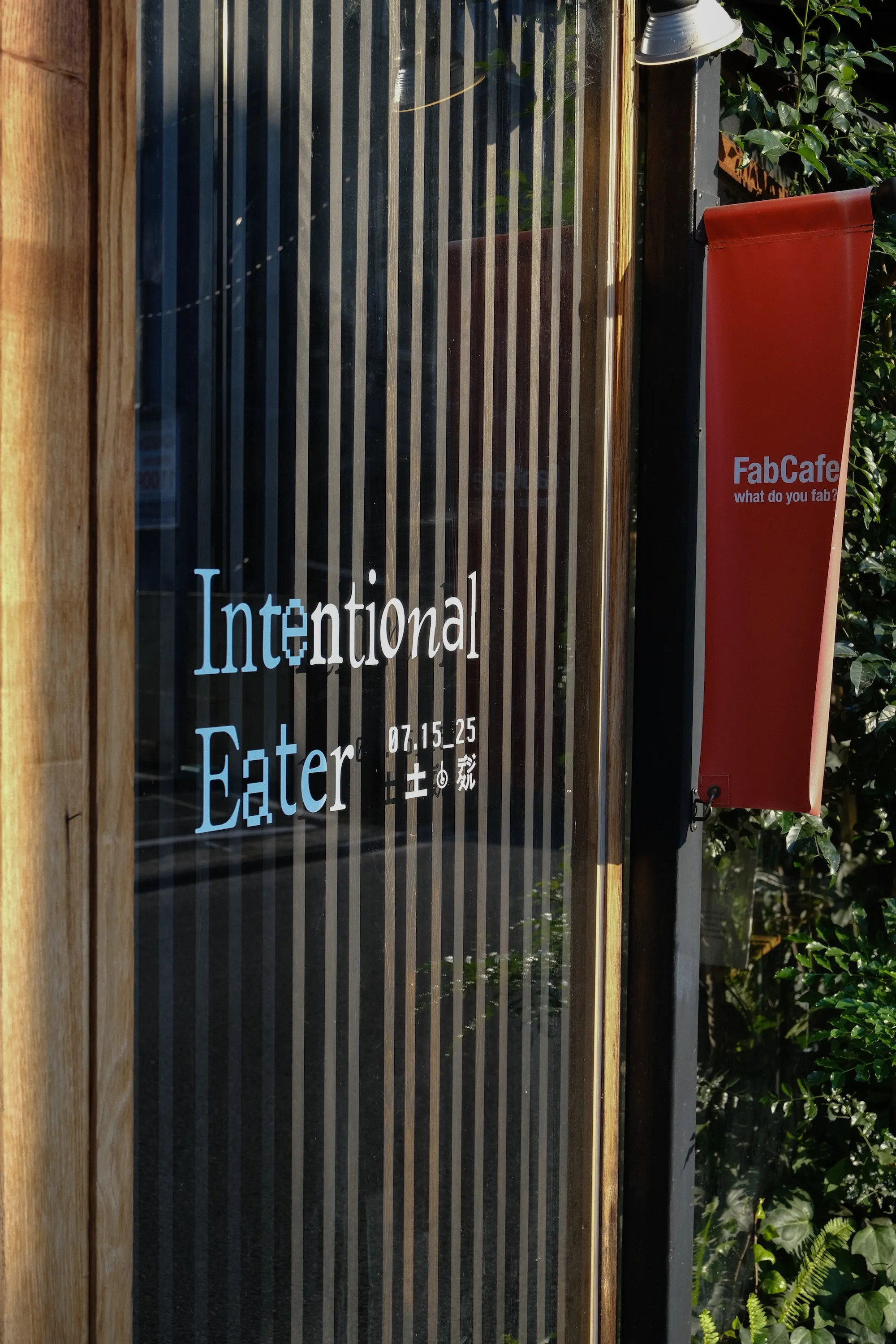
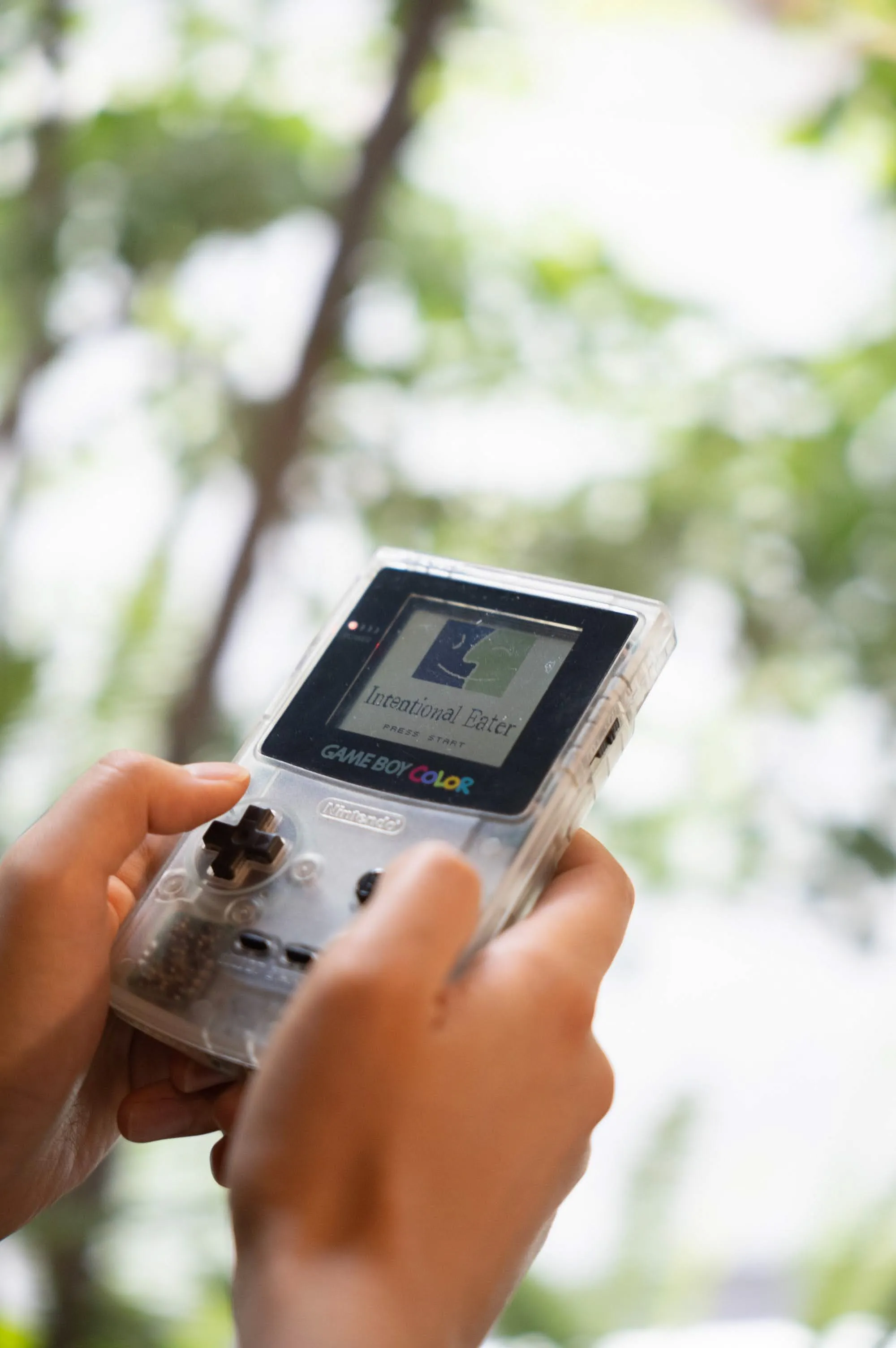
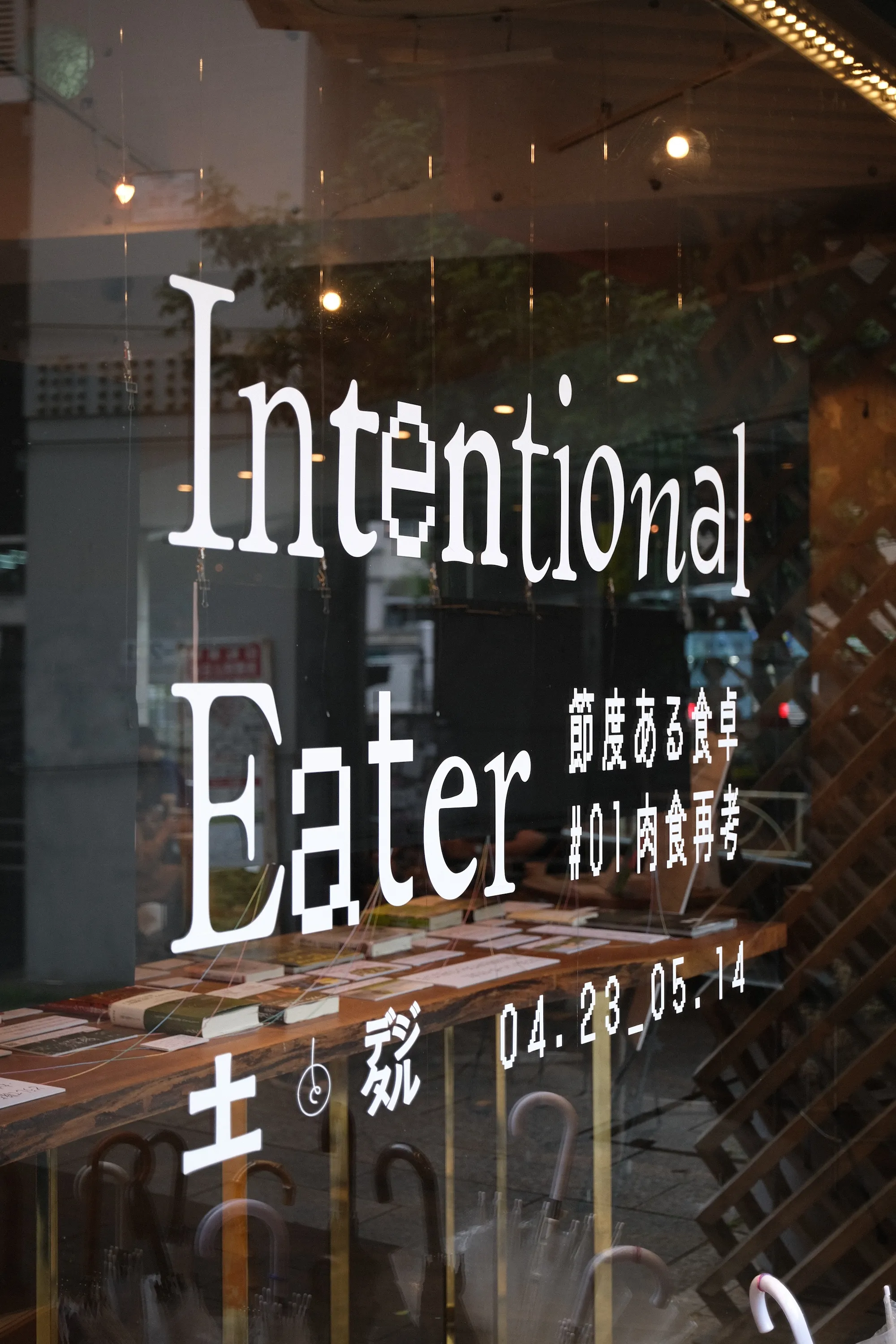
「Intentional Eater 節度ある食卓」は、食卓にまつわる様々な視点を取り上げ、普段とは異なる角度から「食べる」を捉え直す試みです。
“Fast, tasty, and cheap”—
this value system, emblematic of an era of mass production and mass consumption, has long supported our everyday meals.
Today, however, the environmental burden and climate impacts caused by excessive production and consumption can no longer be overlooked. Eating is not merely a matter of personal preference; it is an act that influences human society, the natural world, and future ecosystems. Each time we eat, we enter into a relationship with non-human beings, shaping and being shaped by those connections.
In recent years, signs of change have begun to emerge in our food values: the renewed attention to the Slow Food movement, the spread of veganism, and the introduction of the Michelin Green Star. Evaluation criteria that once ended at the dining table are now extending beyond it, toward the origins of ingredients and the processes through which food reaches us.
Intentional Eater: A Temperate Table explores these perspectives, inviting us to reconsider eating as a conscious, interconnected act.

土とデジタルのメンバーを中心に、食卓を切り口にしたニュース・価値観・矛盾などを取り上げるPodcast。様々な立場や価値観の違いをそのまま持ち寄りながら、考え続けるための対話を記録していきます。
A podcast led by members of Bit and Bio, using the dining table as a starting point to explore news, values, and contradictions. By bringing together different perspectives as they are, we document dialogues that help us continue thinking—without trying to resolve everything too quickly.

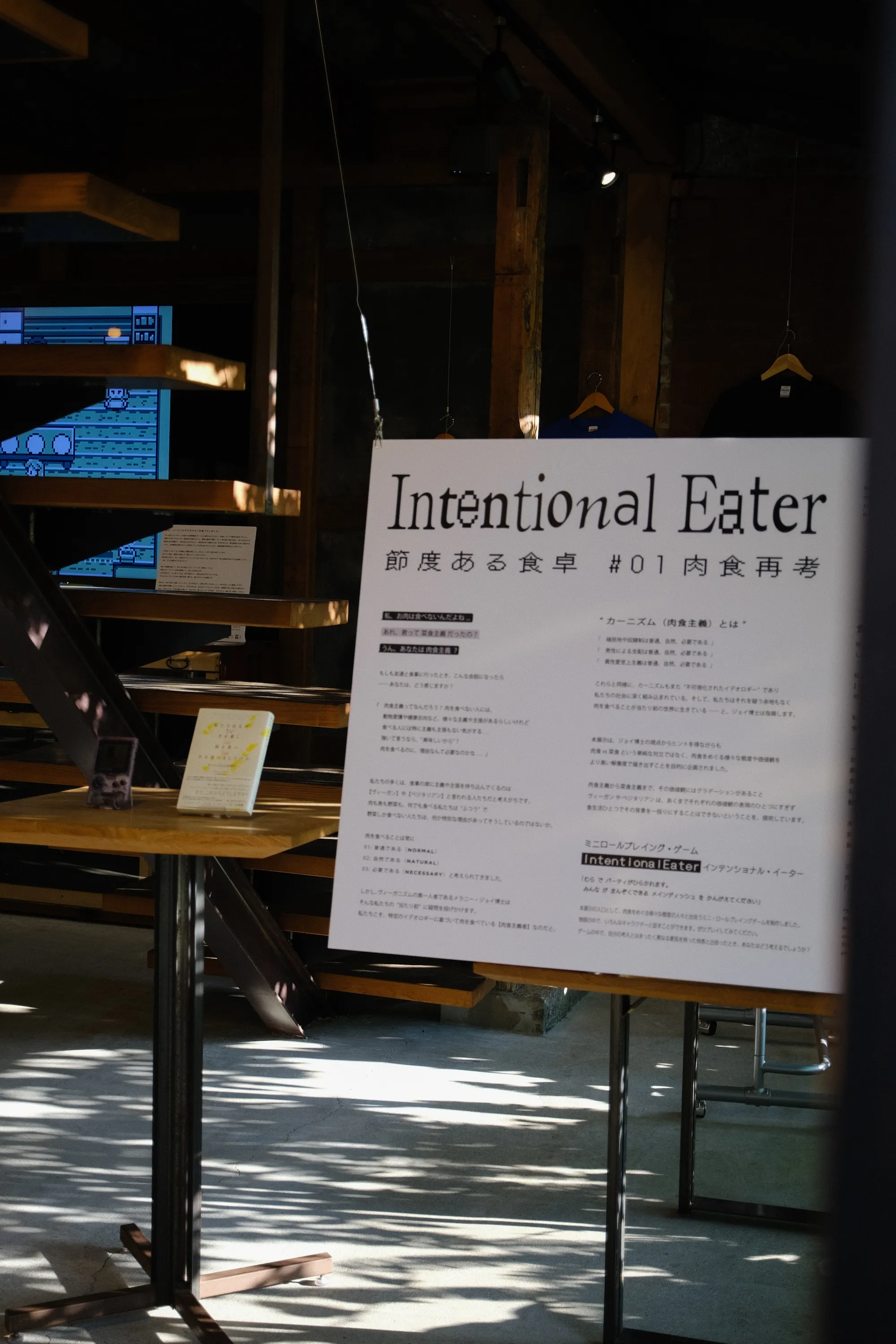
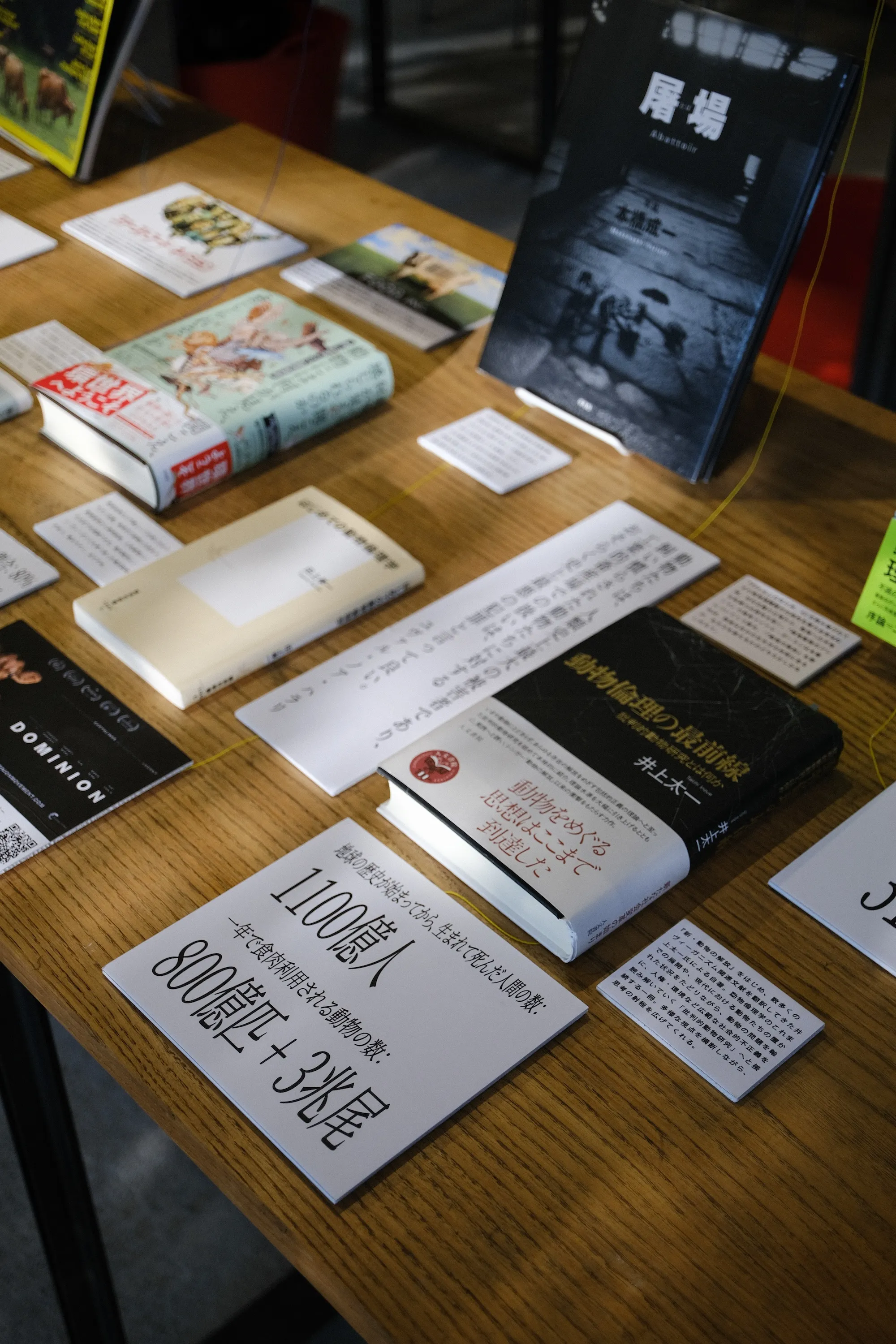
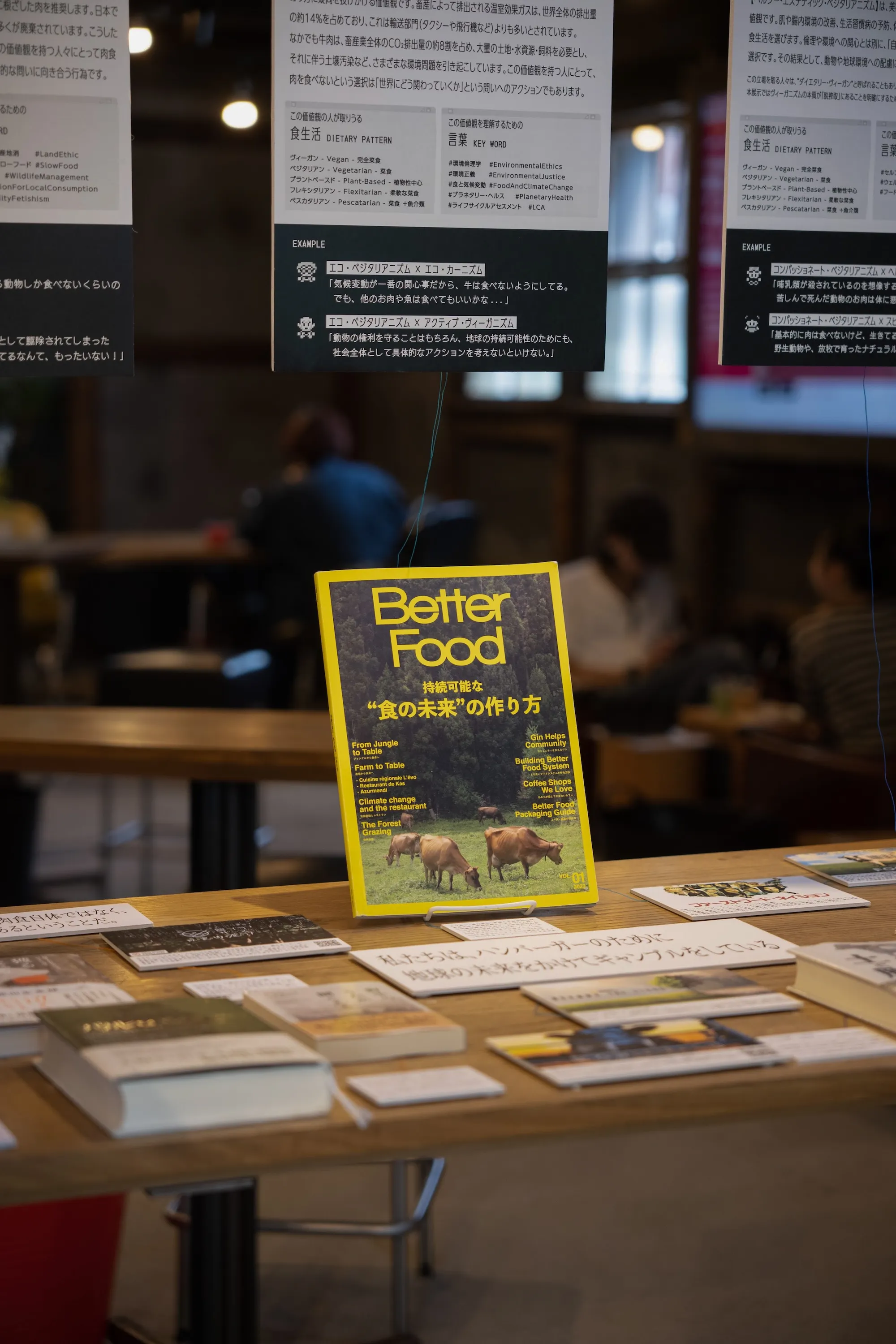
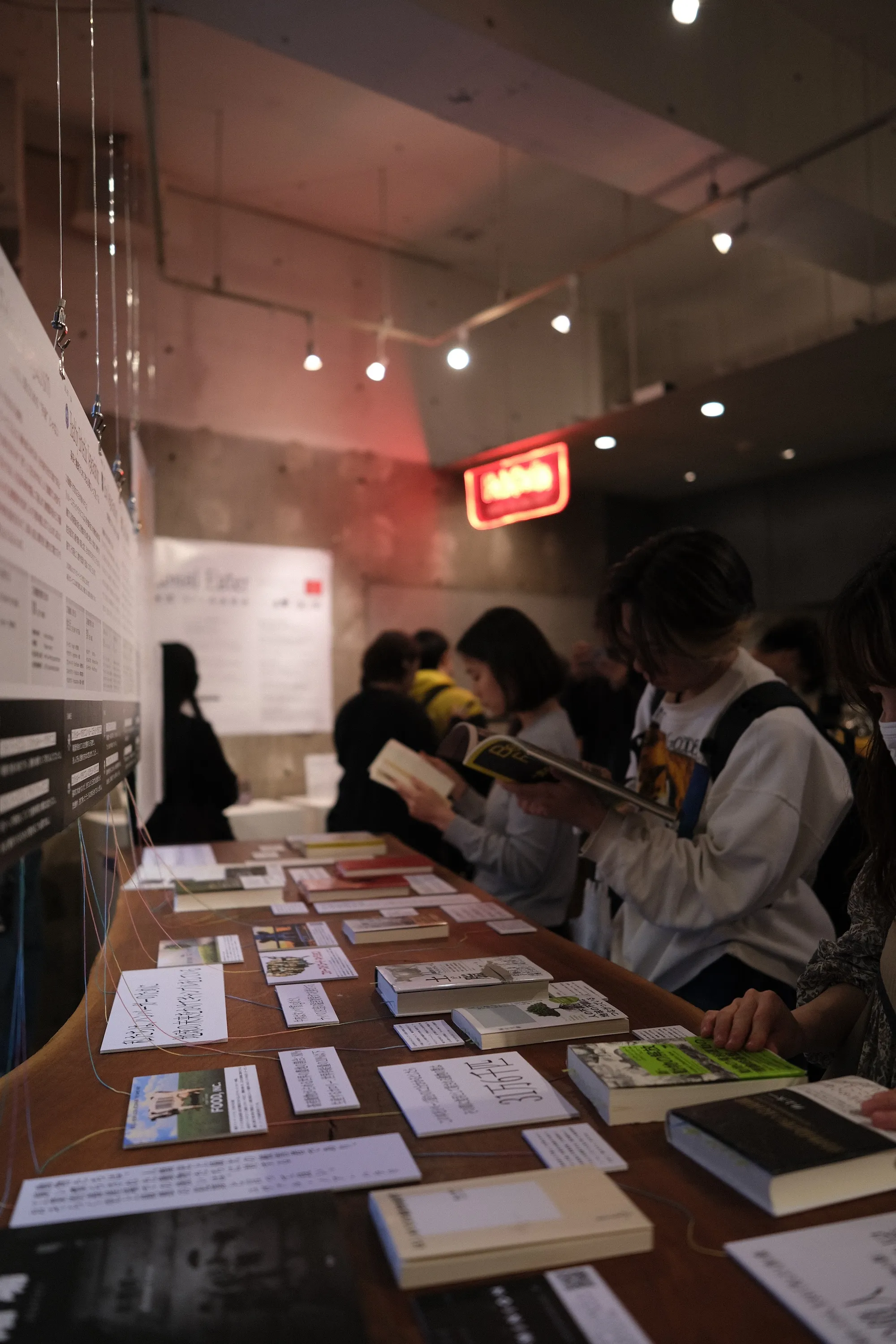
自分の食べ方をもう一度、見直してみる機会の提供を目的とした展示を行っています。第一弾では、肉食再考をテーマに、東京と京都を巡回しました。
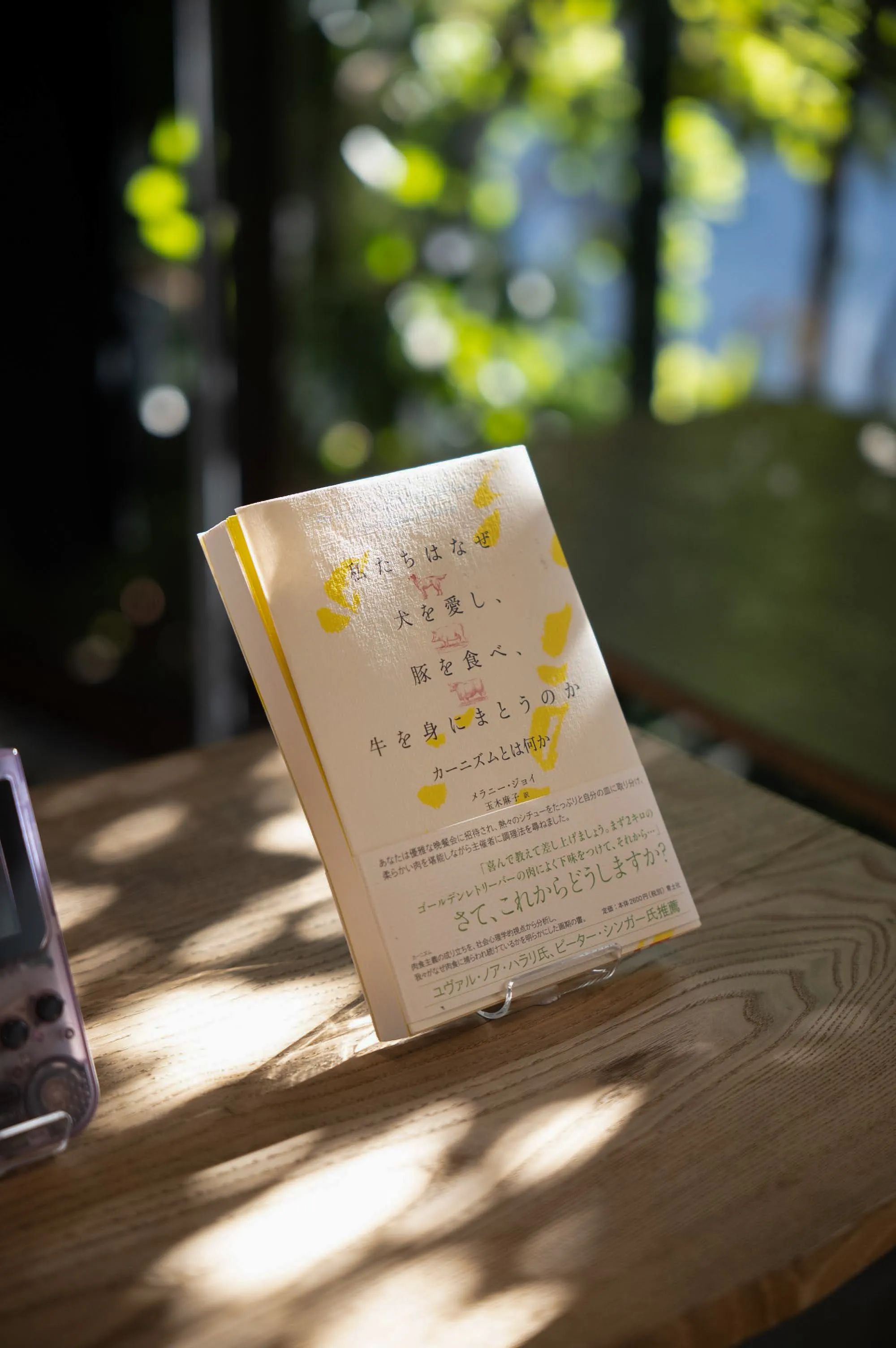
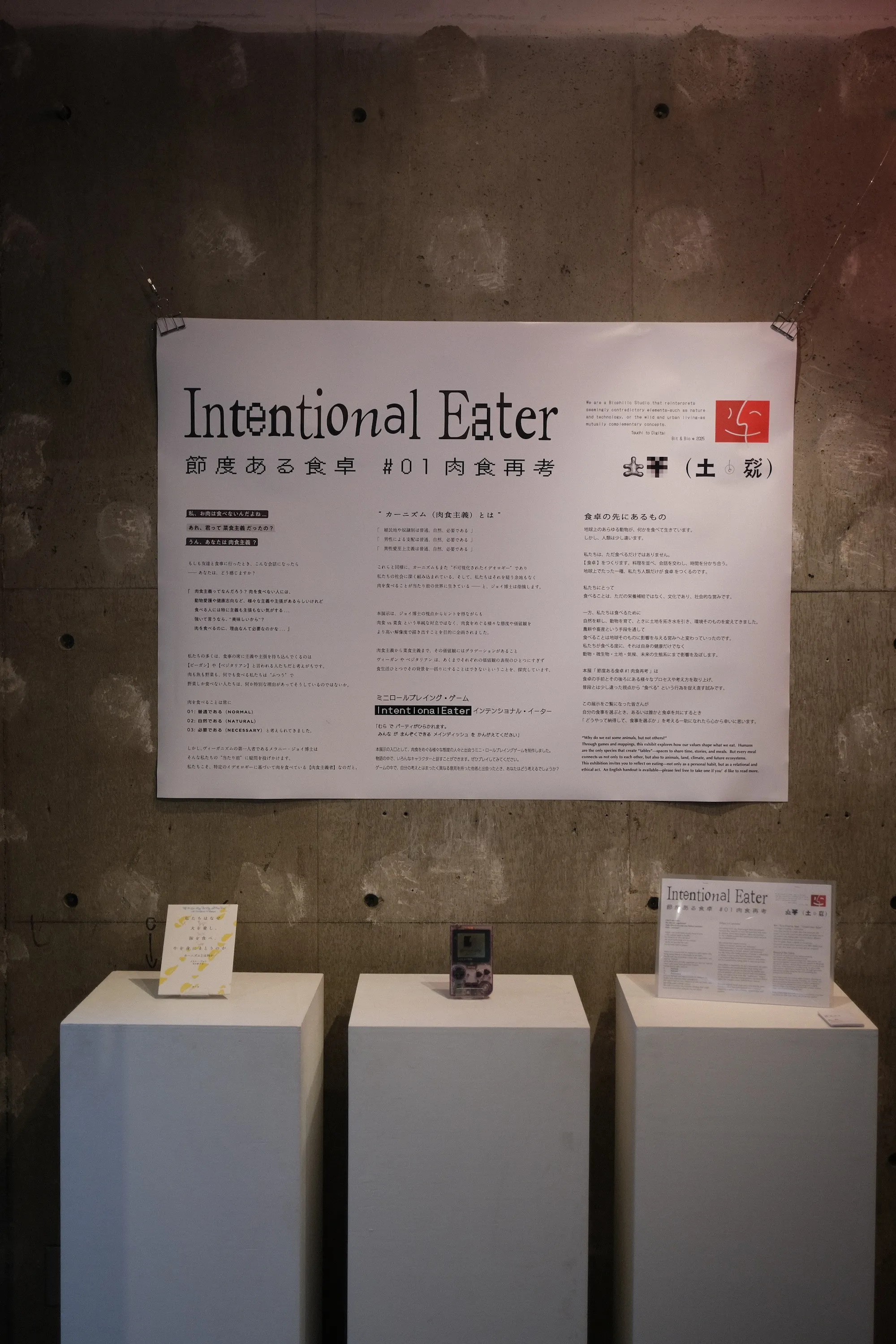
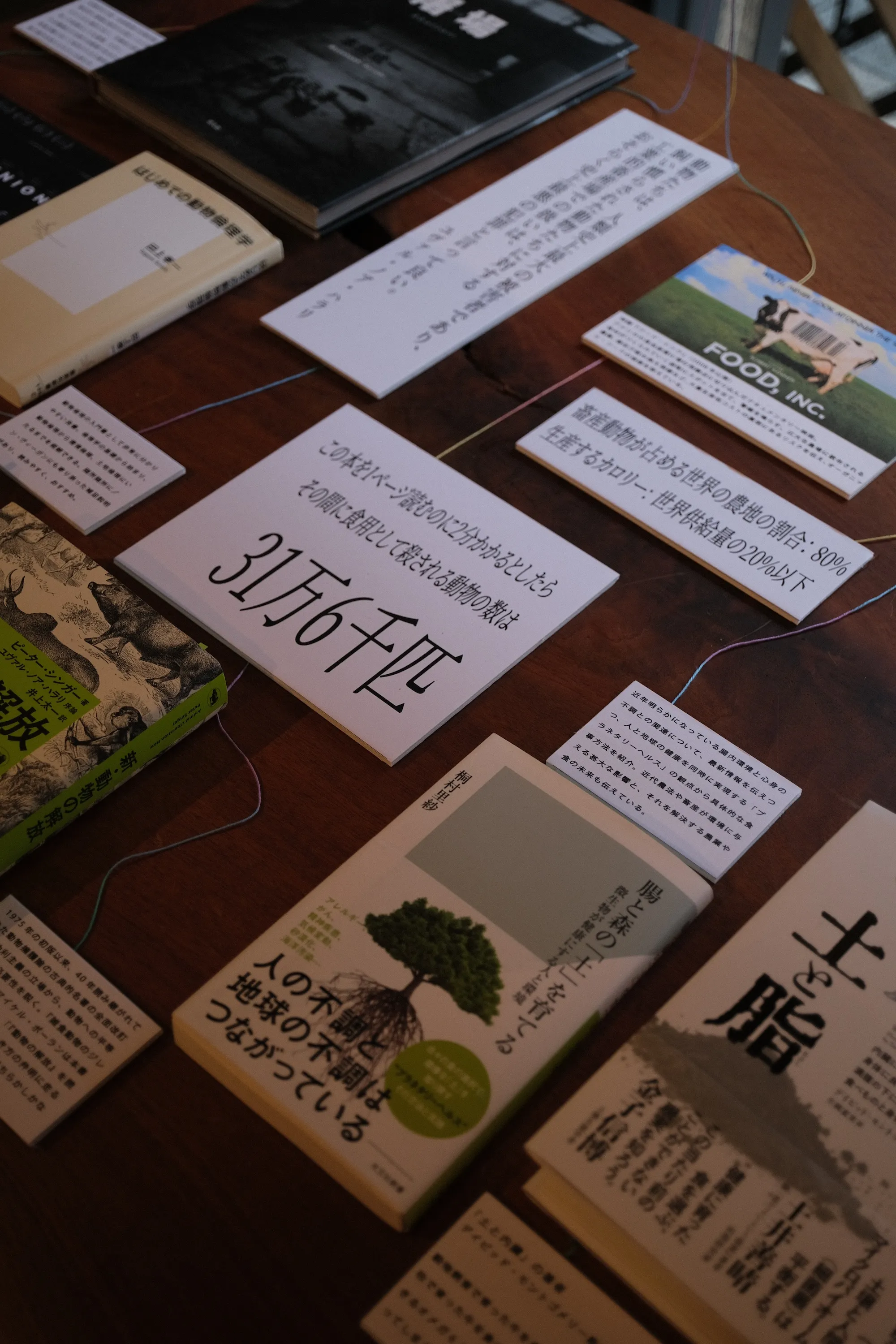
なぜ肉を食べるのか、あるいは、食べないのか。食べるならどんな肉を食べるのか。肉を食べることは常に、①普通である(Normal)、②自然である(Natural)、③必要である (Necessary)と考えられてきました。そんな我々の”当たり前”を、ヴィーガニズムの第一人者であるメラニー・ジョイ博士は”肉食主義”と呼びます。ジョイ博士は、あまりにも当たり前すぎて人々は気づいていないが、実は見えない信念や社会システムに基づいて肉を食べることを選択させられている、と言います。つまり、肉食は不可視化されたイデオロギーであるという主張です。
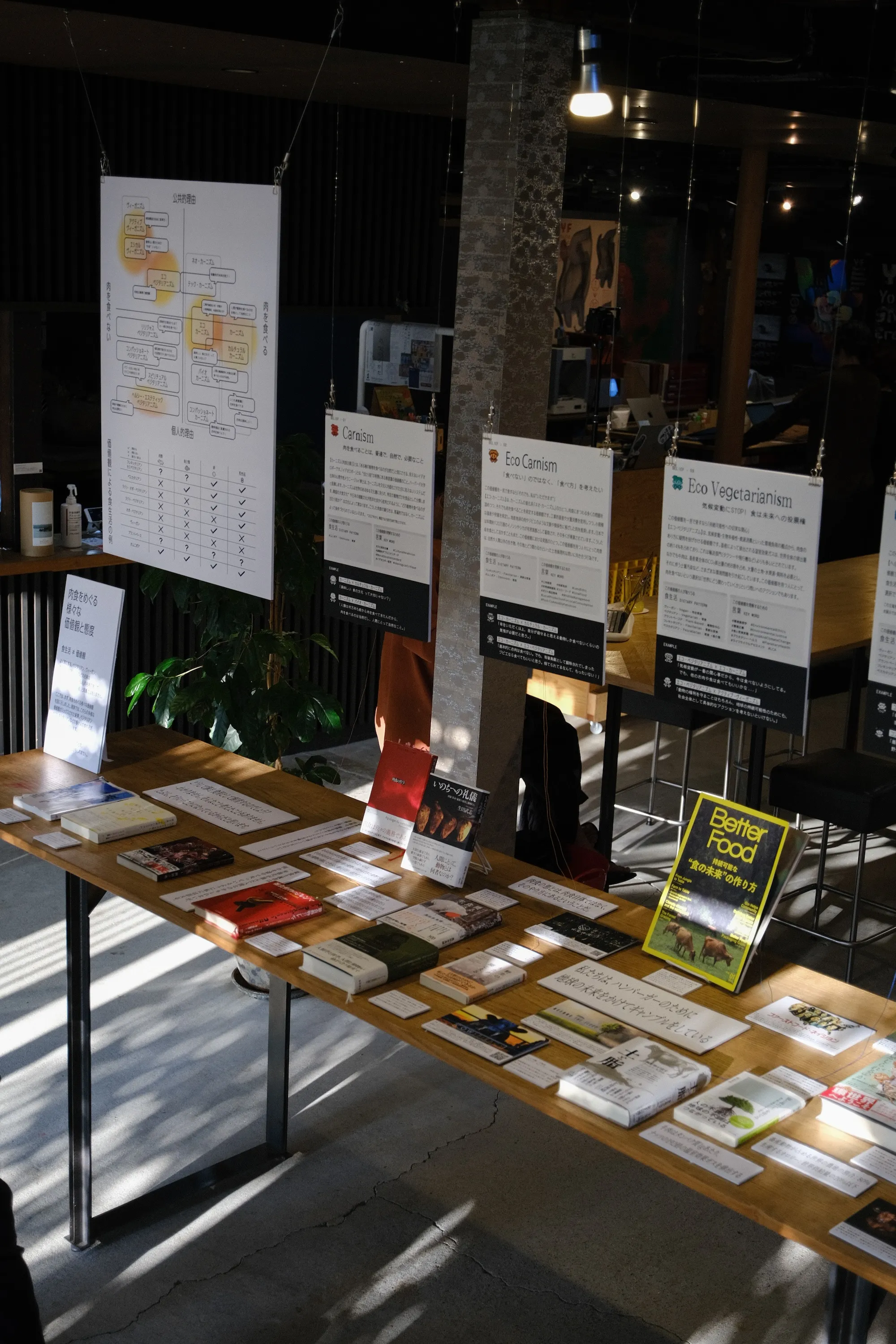
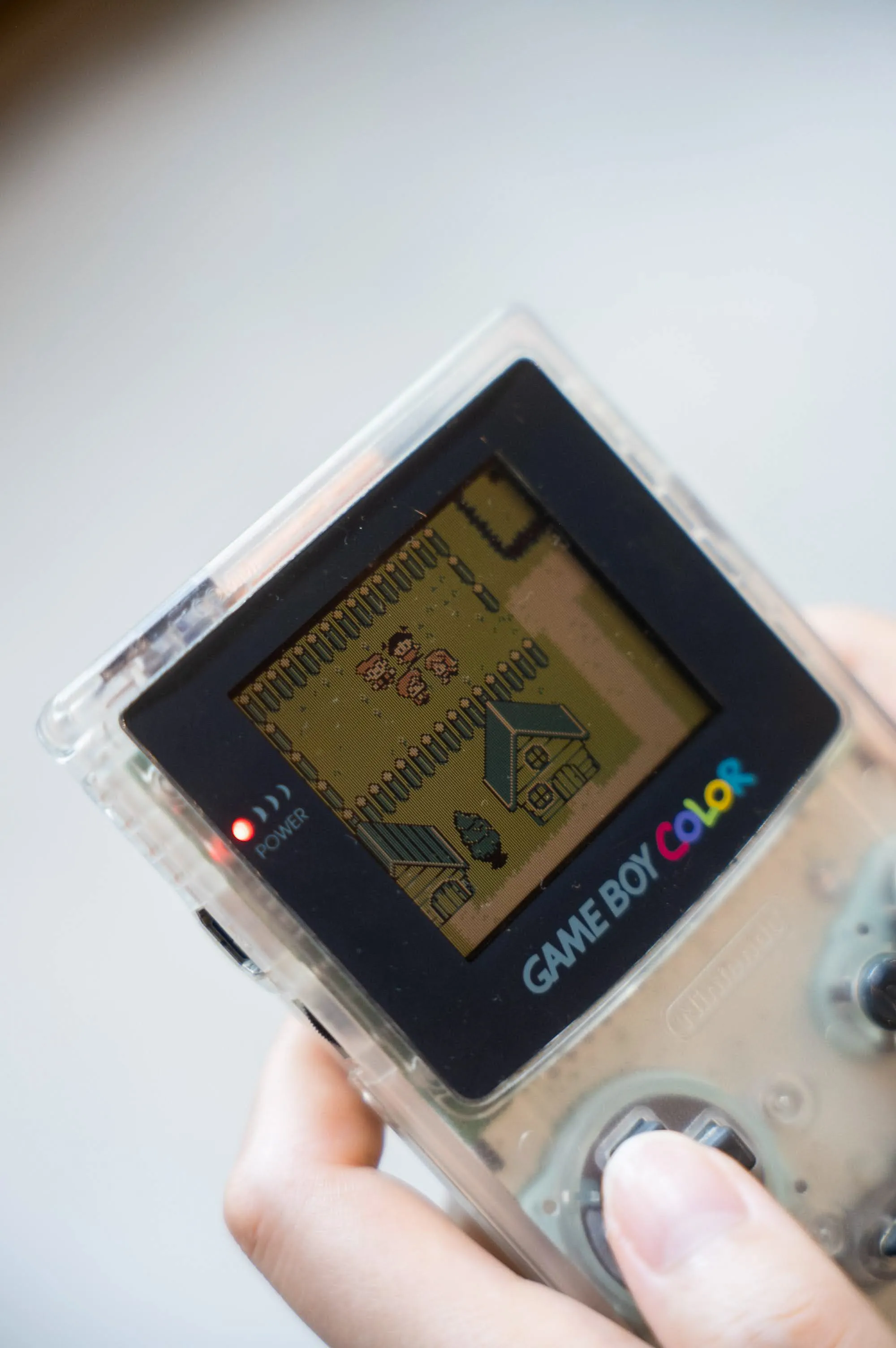
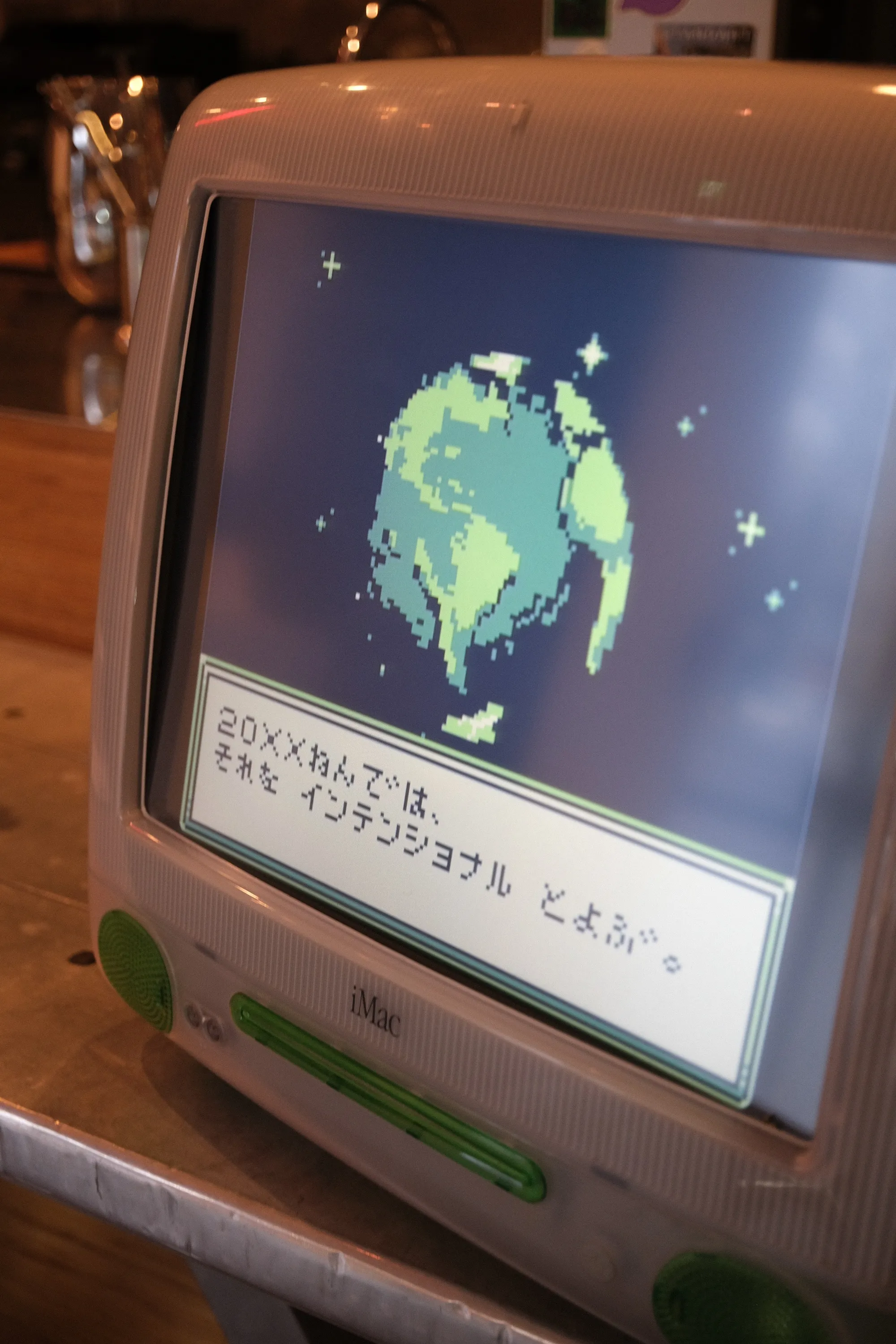
本展示では、食肉の背景にある様々な視点をミニ・ロールプレイングゲームとして提供しました。ジョイ博士の主張からヒントを得ながらも、肉食主義 vs 菜食主義といったイデオロギーを対立化させるのではなく、その間にあるグラデーションをできるだけ解像度高く可視化することに主眼を置きました。
ー Intentional Eater 節度ある食卓 #01 肉食再考 イントロダクション
We organize exhibitions with the aim of offering opportunities to reflect on our own ways of eating.
In our first edition, themed Rethinking Meat, we toured Tokyo and Kyoto.
Why do we eat meat—or choose not to? If we do eat meat, what kind of meat do we eat?
For a long time, eating meat has been regarded as something that is Normal, Natural, and Necessary.
Melanie Joy, a leading figure in veganism studies, refers to this taken-for-granted assumption as carnism. She argues that although most people are unaware of it, we are in fact guided by invisible beliefs and social systems that lead us to choose meat. In other words, meat eating is sustained by an invisible ideology.
In this exhibition, we presented multiple perspectives surrounding meat consumption through a mini role-playing game. Inspired by Dr. Joy’s work, we chose not to frame the issue as a simple opposition between carnism and vegetarianism. Instead, we focused on visualizing—at high resolution—the gradients that exist between these positions.
— Intentional Eater: A Moderate Table #01 – Rethinking Meat Introduction




ニュースレターでは、土とデジタルのメンバーが最近考えていること、気になっていることを随時お届けします。私たちとともに悩んでくれる方は是非、ご登録ください。
The newsletter shares what members of Tsuchi to Digital have been thinking about and paying attention to lately. If you would like to reflect and wrestle with these questions alongside us, we warmly invite you to subscribe.

土とデジタル

私たちは、自然とテクノロジーや、野生と都市生活など、一見相反するものを、相互補完性のある概念として捉え直し、その実感と実態を、企業や個人と共に生み出すバイオフィリック・スタジオです。自然にまつわる様々な危機が迫りくる一方で、2050年までに世界人口の約68%が都市部に居住すると予測されています。 都市のふるまいこそ、これからの世界のありようを決めるのだとしたら、そこに生きる人々の生活と仕事の中には、自然への敬意と地域との繋がり、倫理と節度が必要です。想いを共有できる人々と共に、私たちは様々な手法を通じて、都市の中に自然との新たな関係性を見出して行きます。
We are a biophilic studio that reconsiders seemingly opposing forces—such as nature and technology, or the wild and urban life—as complementary concepts, and works with companies and individuals to bring both the experience and the reality of this relationship into being.
While various nature-related crises are becoming increasingly urgent, it is predicted that around 68% of the world’s population will live in urban areas by 2050. If the way cities function will shape the future of our world, then the lives and work of the people within them must be grounded in respect for nature, connection to local communities, and a sense of ethics and moderation. Together with those who share these values, we explore diverse approaches to discovering new relationships with nature within the urban environment.
©︎ 2026 土とデジタル